
Recently my friend Michael Levy had a very clever idea. It was to publish cheaper versions of well-known books, the idea being that they would be basically the same but slightly altered to avoid copyright problems. For example, Ray Bradbury’s Fahrenheit 451 would be re-published as Fahrenheit 350 – who needs the extra heat?
In the same way F Scott Fitzgerald’s The Great Gatsby would reappear as The Mediocre Gatsby but it had a much cheaper price. And finally, Virginia Woolf’s To the Lighthouse could be obtained under the title To the Outhouse at a bargain price.
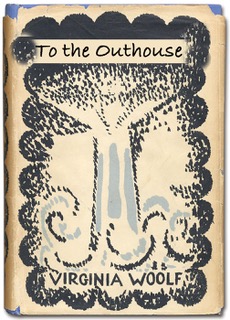
However, little did Levy know that this phenomenon had already appeared. Famous authors produced, on their own initiative, cheaper versions of their famous works. Often this was the result of trial and error trying to find a good title. A lot of times it was the result of trying to follow up a success with similar versions of the popular work.
For example TE Lawrence (of Arabia)’s Seven Pillars of Wisdom wasn’t always that. Initially it was
( checks notes ) Three Pillars of Wisdom but that was a flop. So Lawrence increased the wisdom from four pillars to five then eventually six. At this point he almost gave up but decided on one more try, and it turned out that seven pillars was the Sweet Spot.
Similarly, 100 Years of Solitude didn’t always last 100 years. The first draft was A Long Weekend of Solitude but that didn’t go over very well. The author increased the period of solitude first by days, then by weeks, then by months, and finally by years, until he realized that 100 was the sweet spot.
In the same way Love in the Time of Cholera was originally Love in the Time of a Really Nasty Cold. That lacked drama so the cold was escalated to flu then to scarlet fever and finally to cholera.
In the same way after the success of Gulliver’s Travels, Swift tried to cash in with follow ups about less ambitious trips of Gulliver. Thus was born Gulliver’s Weekend Getaways but it did not enjoy the same success.
After the success of the Brothers Karamazov, Dostoevsky tried to follow up with the Second Cousins Karamazov.
Boris Pasternak was very happy with the success of Dr. Zhivago and wanted to follow it up with a novel about Zhivago’s early career. However Third Year Resident Zhivago was never a real success.
Sometimes authors revise their works to be more relevant to the current environment. Jane Austen’s estate republished Pride and Prejudice as Healthy Self-esteem and Prejudice but it just didn’t have the same ring to it. At one point Victor Hugo decided that Les Miserables was too negative so he changed it to Les Mal Foutus, which means The Out of Sorts. It didn’t work.
Of course it’s not just books to which this phenomenon happens. Other works of art, like the musical Les Miserables, had cheap versions. For example, it was only George Martin’s intervention that prevented the Beatles’ songs She Loves You and I Want to Hold your Hand being released as She Kind of Likes You and I Want to Hold your Elbow.
Probably the worst example is Lloyd Webber’s Cats follow up. Lloyd Webber wanted to write another musical about pets but didn’t like the obvious choice, Dogs. He considered other pets, like Parrots, but we have every right to question his final choice.The musical Gerbils never made it on the charts.

 Bill Wadge's Blog