
 I’ve been to Greece often enough that I’ve picked up a bit of (modern) Greek. Like anyone in my situation, I’ve had fun spotting Greek words with Englishs cognates based on Greek roots, popping up with unusual meanings in unusual contexts. Here’s my story of a typical day in a Greek visit, using some of these words. (I also translate some Greek idioms, like “the Bill Wadge”). Based on a true story.

 In this model there is a first or initial time point, and every time point has a unique successor. Imperative iterations normally terminate, so we should have only finitely many time points. Lucid avoids the complications of finite time domains by making everything at least notionally infinite, so that the domain of time points is the natural numbers with the usual order.
 In the last post we introduced eod (end-of-data), a special sentinel value used to mark the end of a finite Lucid stream. Streams in Lucid are all formally infinite (non terminating) but we can use eod to represent finite streams as infinite ones filled with eod past a certain point. For example the finite stream of the first five primes is
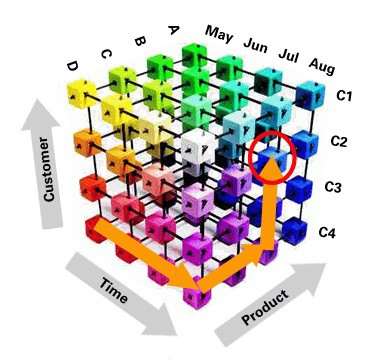 The late Ed Ashcroft and I discovered this possibility when we tried to “add arrays” to Lucid. Initially, we intended Lucid to be a fairly conventional, general purpose language. So we considered various ‘features’ and tried to realize them in terms of expressions and equations.
 The
The 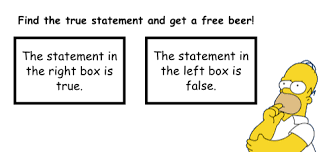 In my not-so-humble opinion, most (maybe all) paradoxes are the last step in a proof by contradiction that some unstated assumption is false.
 Even more interesting is the fact that this situation – the limits of facts and rules – reappears in other domains, including games, natural language, and even psychology.
-
Join 82 other subscribers
-
Recent Posts
Archives
- September 2025
- May 2025
- February 2025
- July 2024
- June 2024
- April 2024
- March 2024
- February 2024
- April 2023
- March 2023
- February 2023
- December 2022
- November 2022
- July 2022
- June 2022
- May 2022
- March 2022
- February 2022
- January 2022
- December 2021
- August 2021
- July 2021
- June 2021
- May 2021
- March 2021
- February 2021
- January 2021
- September 2020
- August 2020
- July 2020
- June 2020
- April 2020
- March 2020
- February 2020
- January 2020
- December 2019
- October 2019
- June 2019
- April 2019
- March 2019
- October 2018
- September 2018
- November 2017
- June 2017
- May 2017
- April 2017
- March 2017
- March 2016
- January 2016
- December 2015
- November 2015
- October 2015
- September 2015
- July 2012
- April 2012
- March 2012
- December 2011
- May 2011
- April 2011
- March 2011
- February 2011
- July 2010
Meta
 Bill Wadge's Blog